Present
In this section I reflect on my development within all the expertise areas. First I will reflect on my development over the past few years, after which I look back on how each expertise area was being integrated in my Final Bachelor Project.
Creativity & Aesthetics
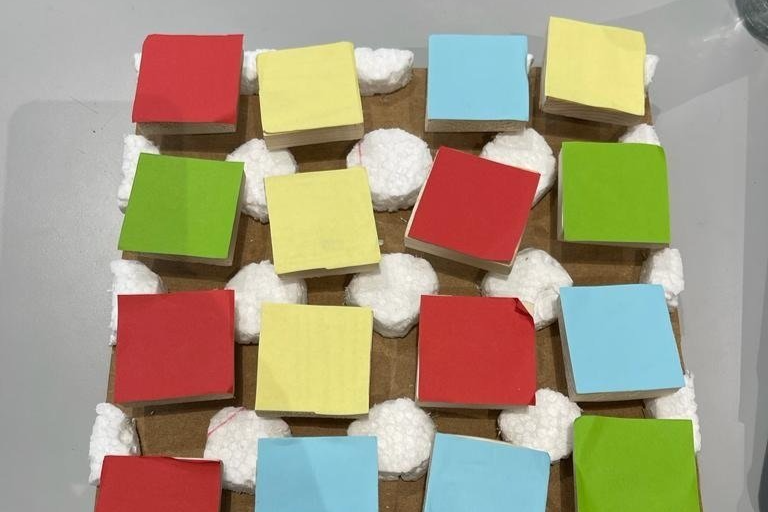
Designing is a constant process of dealing with a lack of information. It is about generating, selecting, and refining ideas by using a variety of creativity techniques and by changing perspectives. The first course that brought me in contact with this expertise area is From Idea to Design. I learned several ideation methods such as tinkering, sketching, and low-fidelity prototyping. Peers showed me you can even take this a step further with design software like Adobe Illustrator, Canva, and Adobe Xd. This made me start learning those software as you can create mid-/high-fidelity prototypes without too much effort. The course Aesthetics of Interaction made me realize that the way users interact with your products has a big impact on the potential of those products. I started thinking more critically about aesthetics and interaction decisions I make for my designs by asking myself questions such as “How can I make this interactive intuitive?”, How does this interaction fit in the overall user experience?”, or “How can aesthetics help in making a particular interaction fit better?” These courses helped me become a designer which has the skill to work with either digital or non-digital tools, and that he can make well-grounded aesthetics and interactions choices.
I used these skills in my Final Bachelor Project (FBP) by even going a step further; since my project (ReFLOW) was relatively complex with multiple elements in it, I created an ecosystem. More specifically, I distinguished all elements (e.g. physical device, app) as ‘bubbles’ with an overarching umbrella: recovery from neuro damage to regain physical independence which had been lost. I visualized all interactions between and inside the bubbles, and all bubbles followed the same fonts, colors, shapes, interactions, and phrasing. This helped others and even me to understand the whole structure of my concept better.
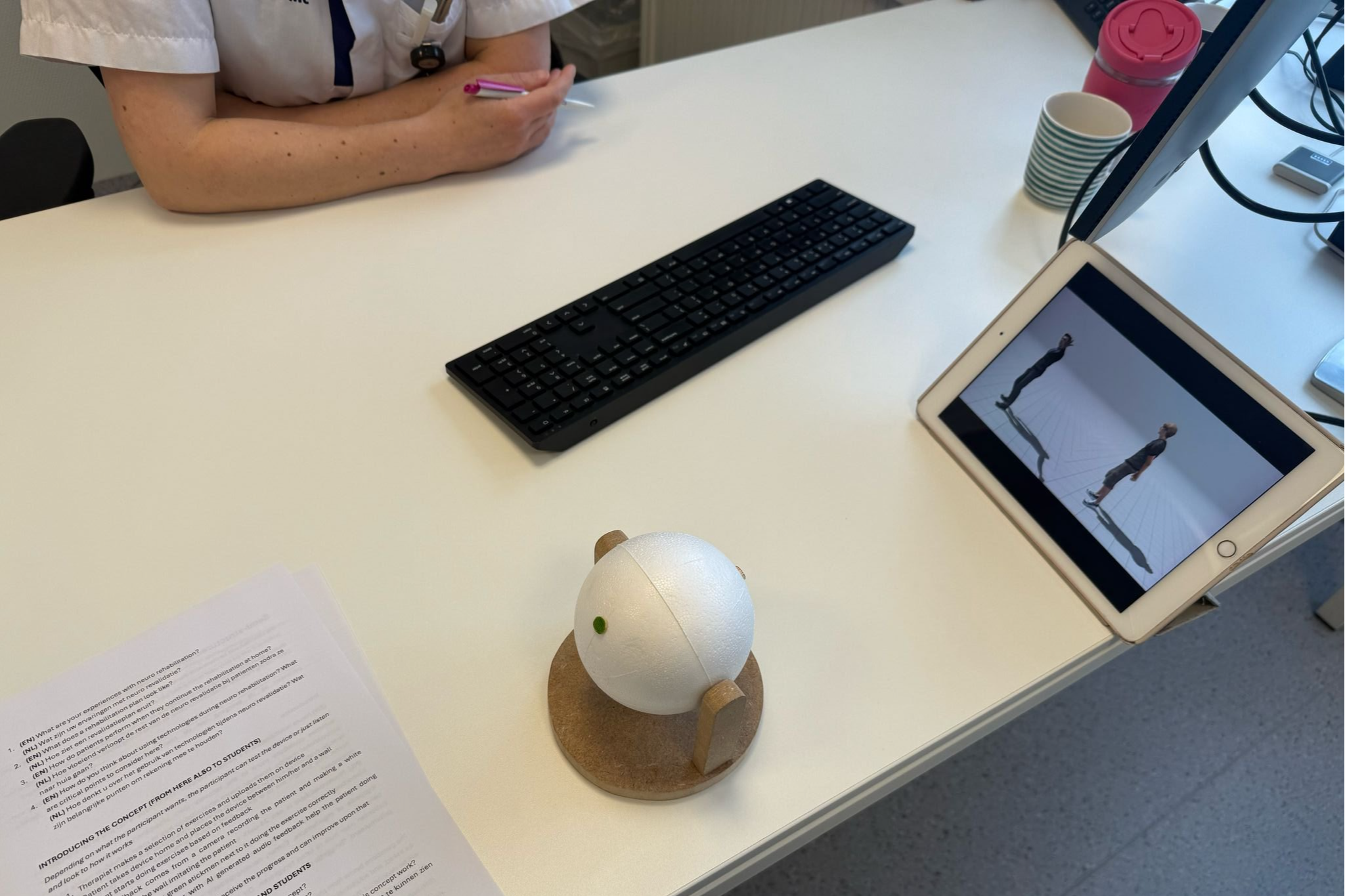
Working with stakeholders in my FBP (neuro patient and neurologist)
Technology & Realization
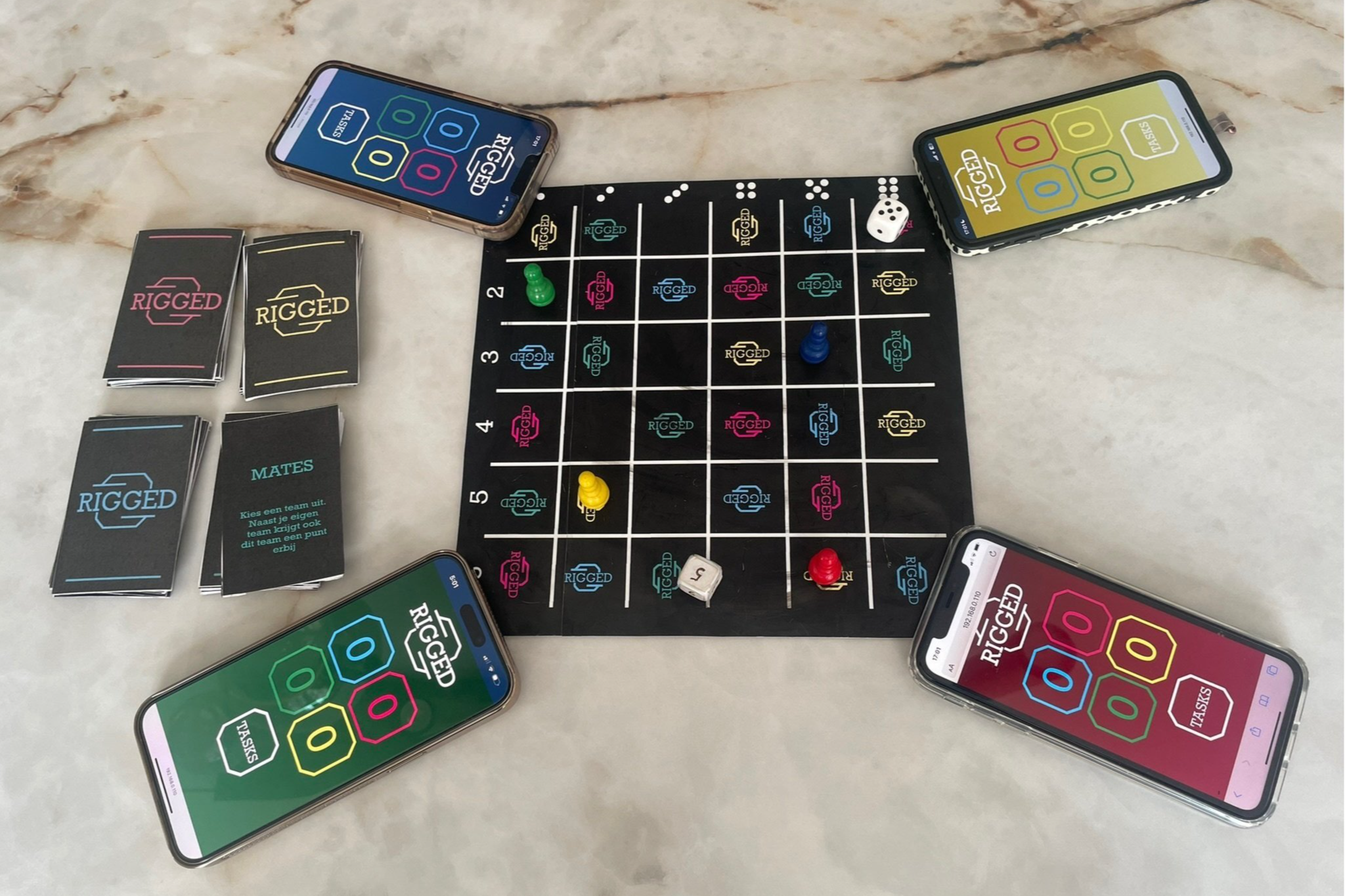
Technology & Realization is about exploring and creating innovative concepts and experiences with the use of various types of technologies. Creative Electronics and Creative Programming helped me a lot in becoming skilled in making prototypes technically work, something I had no experience with. I found it important to have this skill as it can make prototypes more high-fidelity and experienceable. This resulted in being the one in group projects who takes care of the technical part. For example, in project 1 I helped with making Ecodesk function. However, the technologies used were mostly physical (Arduino). I challenged myself to become technically skilled with digital prototypes too by building a fully working application for the party game Rigged with Javascript, HTML and CSS. All these mentioned activities made me a designer which can communicate his ideas by making physical and digital prototypes fully experienceable with his technical skills.
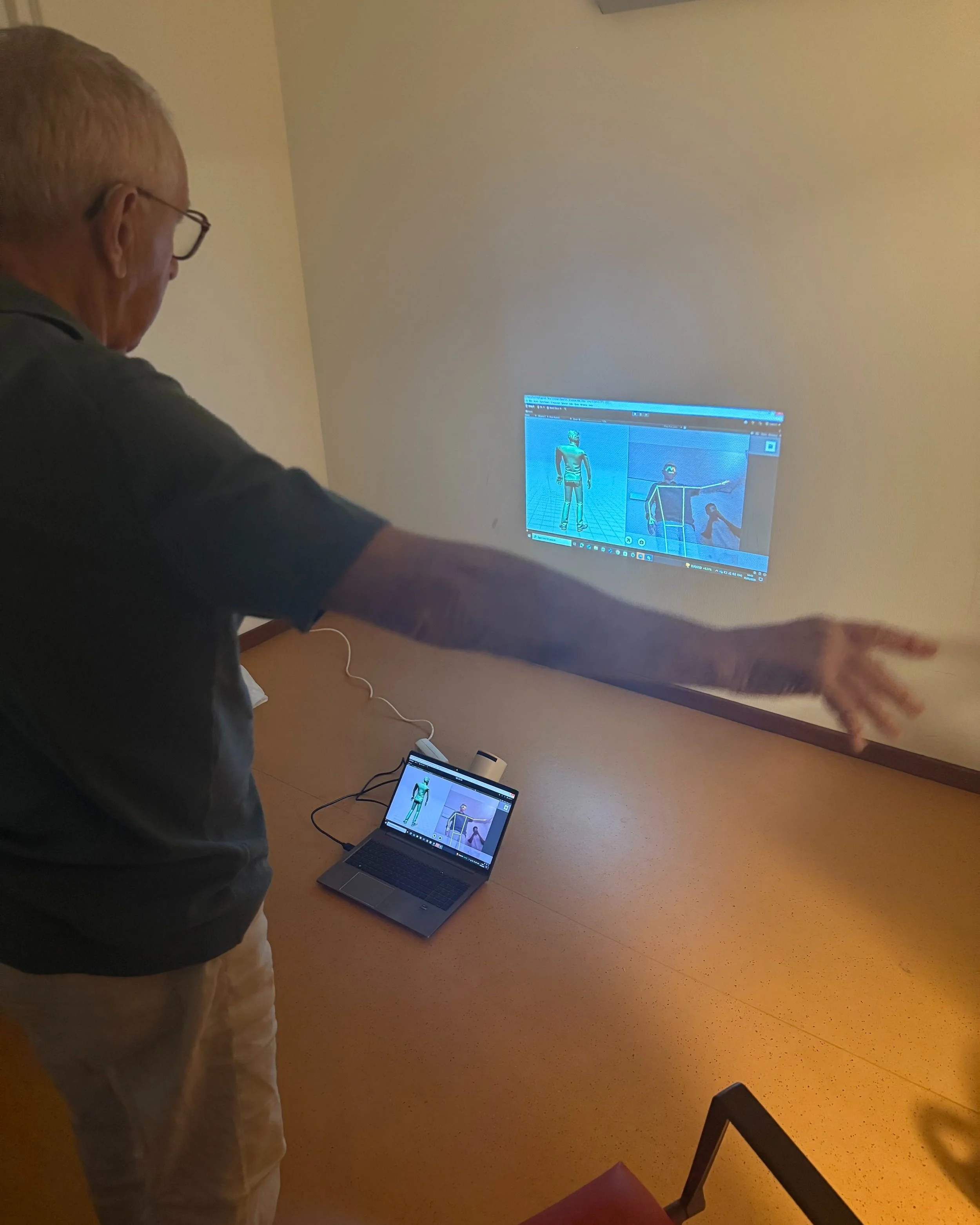
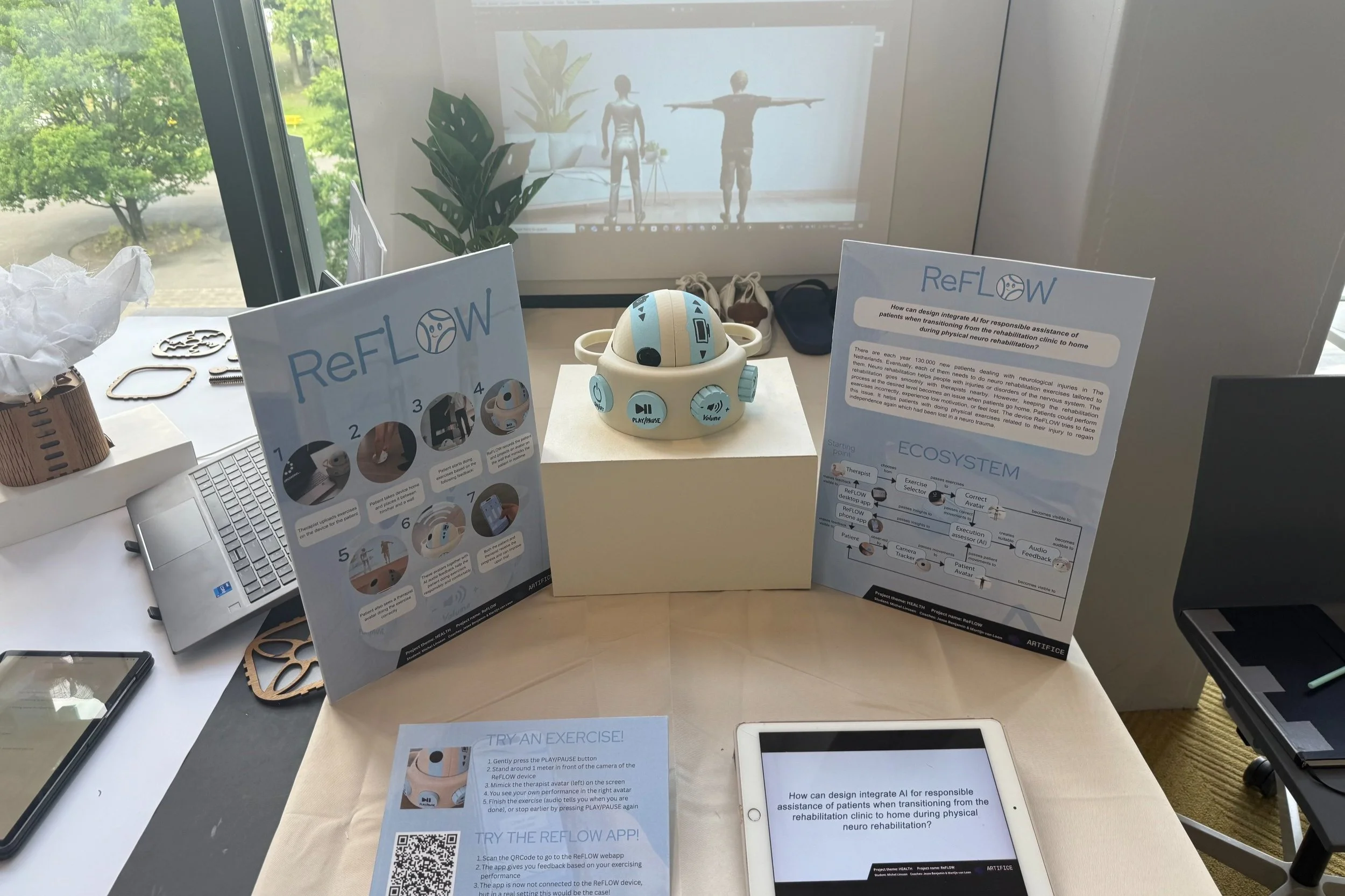
I made use of these skills in my FBP by making a physical prototype with electronics integrated: a button, camera tracker, and an Arduino Uno. These electronics are connected to the beamer which projects the movements of the patient via the camera tracker. This was not a one-way road but an explorative journey, ranging from what technologies are appropriate to make this experience work, to what technologies could fit in the physical form of the prototype. This prototype was mostly created through 3D printing, something which I had little experience with before my FBP (3D printed cassette in project 3).
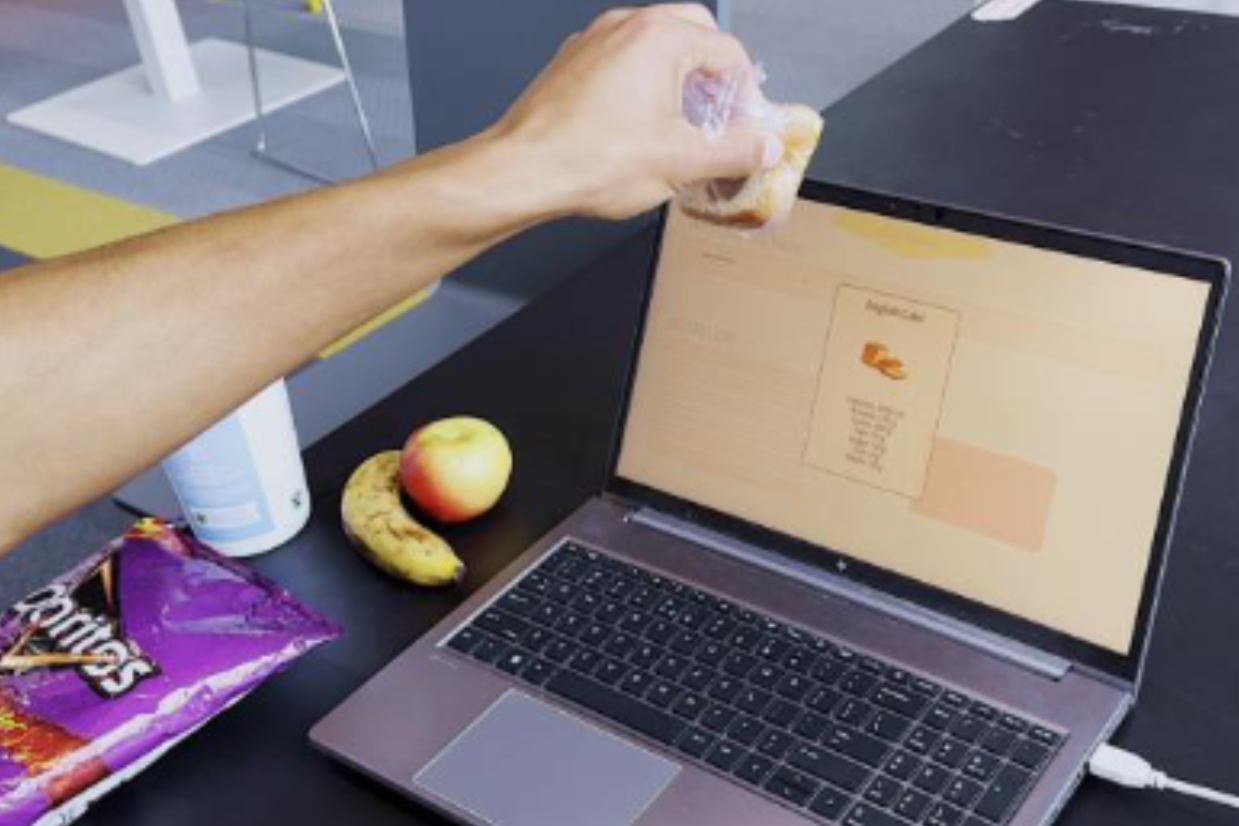


Intelligent Interactive Products (left-top), FBP (bottom), and Designing Connected Experiences (right)
Business & Entrepreneurship
Business & Entrepreneurship focuses on creating meaningful and valuable product-service systems for people and economy. It is about developing business cases, positioning design in company and economic contexts, and managing processes involving multiple stakeholders. My development and interest in this expertise area started with the course Introduction to Business Design. It triggered me to look at concepts from an entrepreneurial perspective; each time I started a new project in the bachelor, I tried to envision how this could actually be put in the market. For example, for project 2 I made a business model canvas and I tried to find possible stakeholders, and for project 3 I participated with my group in a Health Conference where we showed our concepts. These experiences even resulted in choosing a minor (AI & Business Innovation) with a focus in this expertise area. When the development of Rigged was finished, I started marketing and found out that I should not underestimate that. The course Design Innovation Methods provided methods (e.g. user persona, stakeholder union map) valuable for making a good start with marketing Rigged.
This expertise area was not explicitly visible in my FBP. However, I put a little focus on it in the Discussion of my report. I talk here about topics such as how the market for ReFLOW will develop in the upcoming years, who the buyer of the product would be, and how ReFLOW should improve to fit within the existing expectations of the buyer and the potential users of the product. These are topics I would have focussed on if I had additional time.
Design research processes
Design is not just blindly creating new products and services. It is about choosing appropriate methodologies for the challenge to be solved. I figured this out during my bachelor. I found the Reflective Transformative Design Process the most convenient one, making me use this methodology in my FBP. The RTDP is a strong methodology to me because you constantly switch between thinking, envisioning, making and validating, where each switch asks for a moment of reflection. Designing also works like this because it is not just a straight line from brainstorm to end-product.
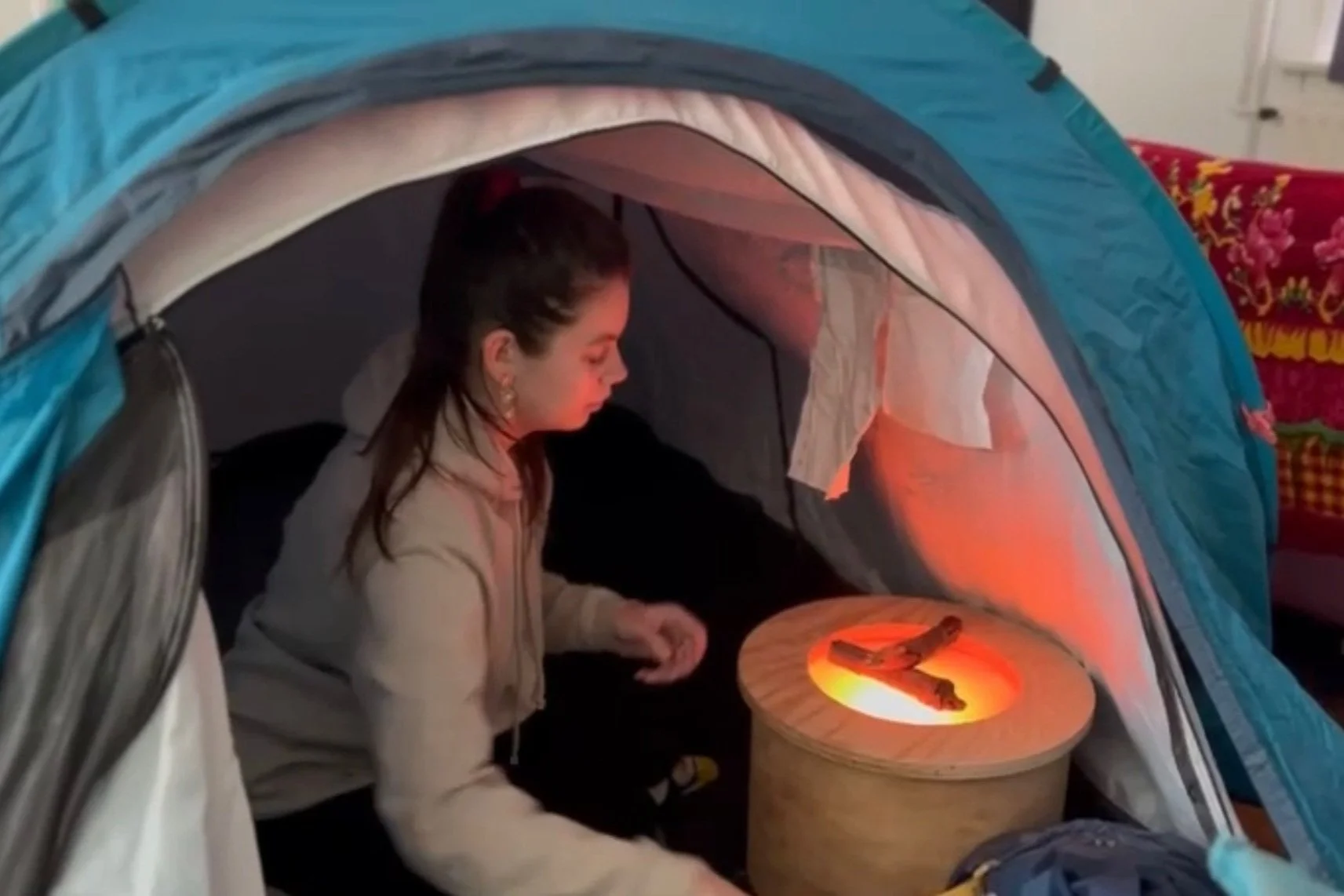
From Idea to Design (top-left), Illustrator and Adobe Xd (top-right), Aesthetics of Interaction (bottom-left), and FBP (bottom-right)
User & Society
Design is about creating value for people that directly impacts everyday life. Before the course User-centered Design, I never thought about the user's perspective. A designed product I like could still easily fail because it was never validated by potential users. They might not understand the product, or it does not fully meet their demands. This course and the semester projects that followed helped me apply methods such as interviews, user-tests, questionnaires, probes, and co-creation sessions to gain valuable user insights. It showed me that users were way more satisfied with end results if their perspective was integrated into the design process. I simultaneously started developing a party game (Rigged) for people of my age, and the user tests and interviews gave huge improvements to the party game up to the tiniest details. In the perspective of me as a designer, these experiences helped me develop the skills to effectively apply the previously mentioned methods to create the best possible product.
My FBP shows how I integrated this knowledge. I worked with multiple stakeholders in the form of interviews and user-tests. All these stakeholders were different from each other (expert, neurologist, therapists, and neuro patient) as I believe that having different perspectives gives the most valuable insights. However, I do not go half-blind in these interviews and user-tests anymore as I set clear goals for each of those moments beforehand. The first interview was explorative, whereas the last interview together with the user-test was focused on validating the tiniest details of ReFLOW.
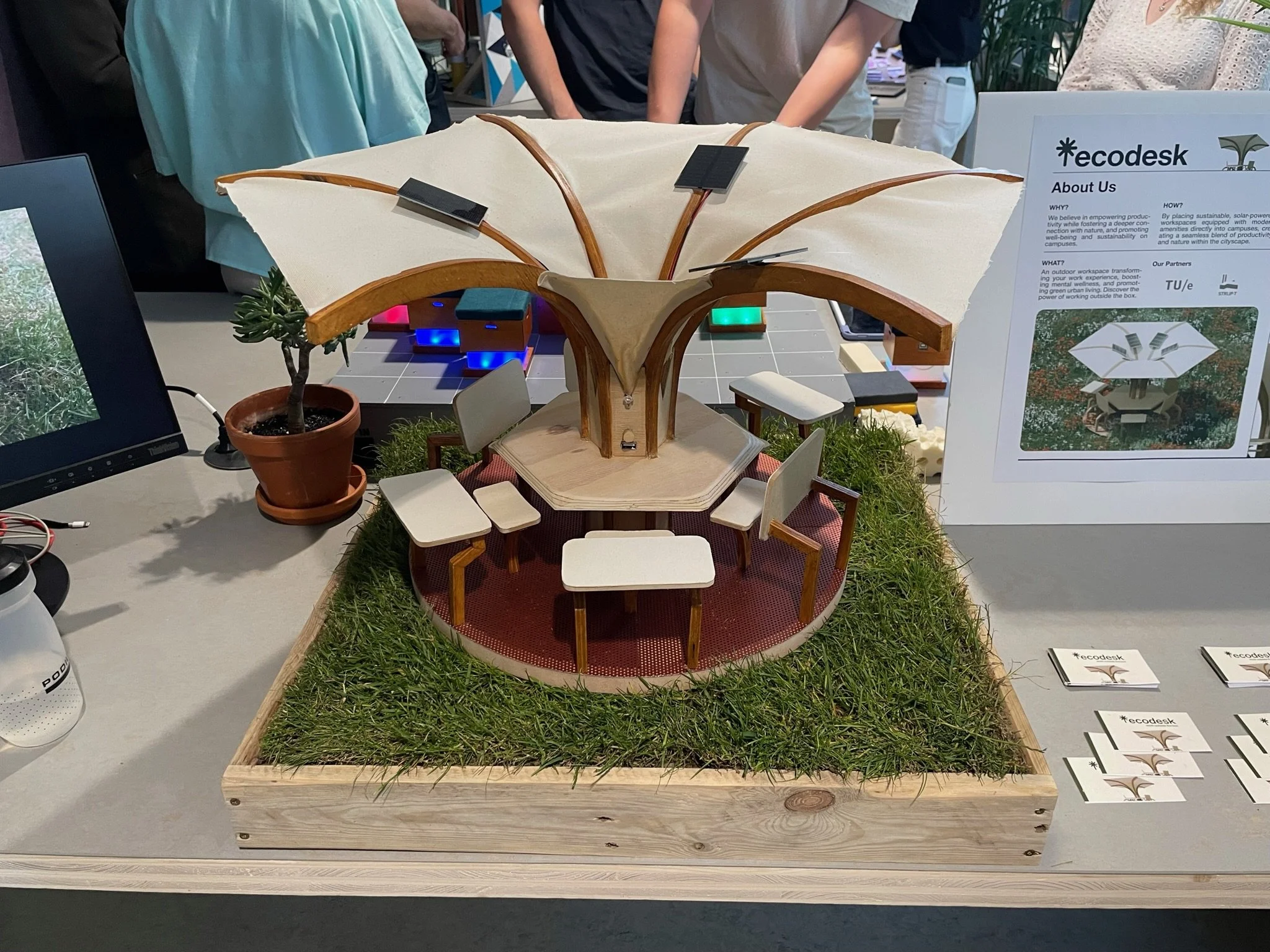
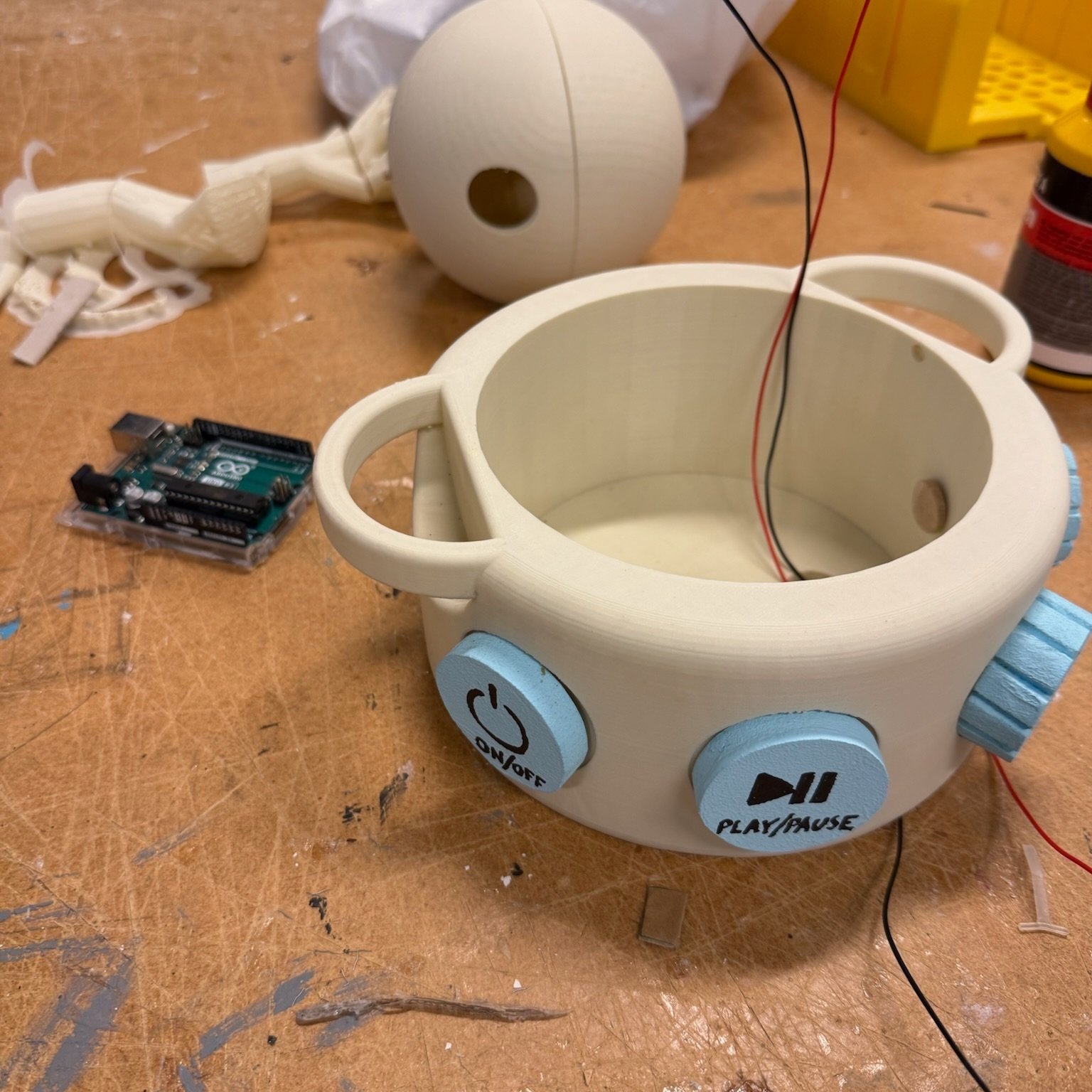
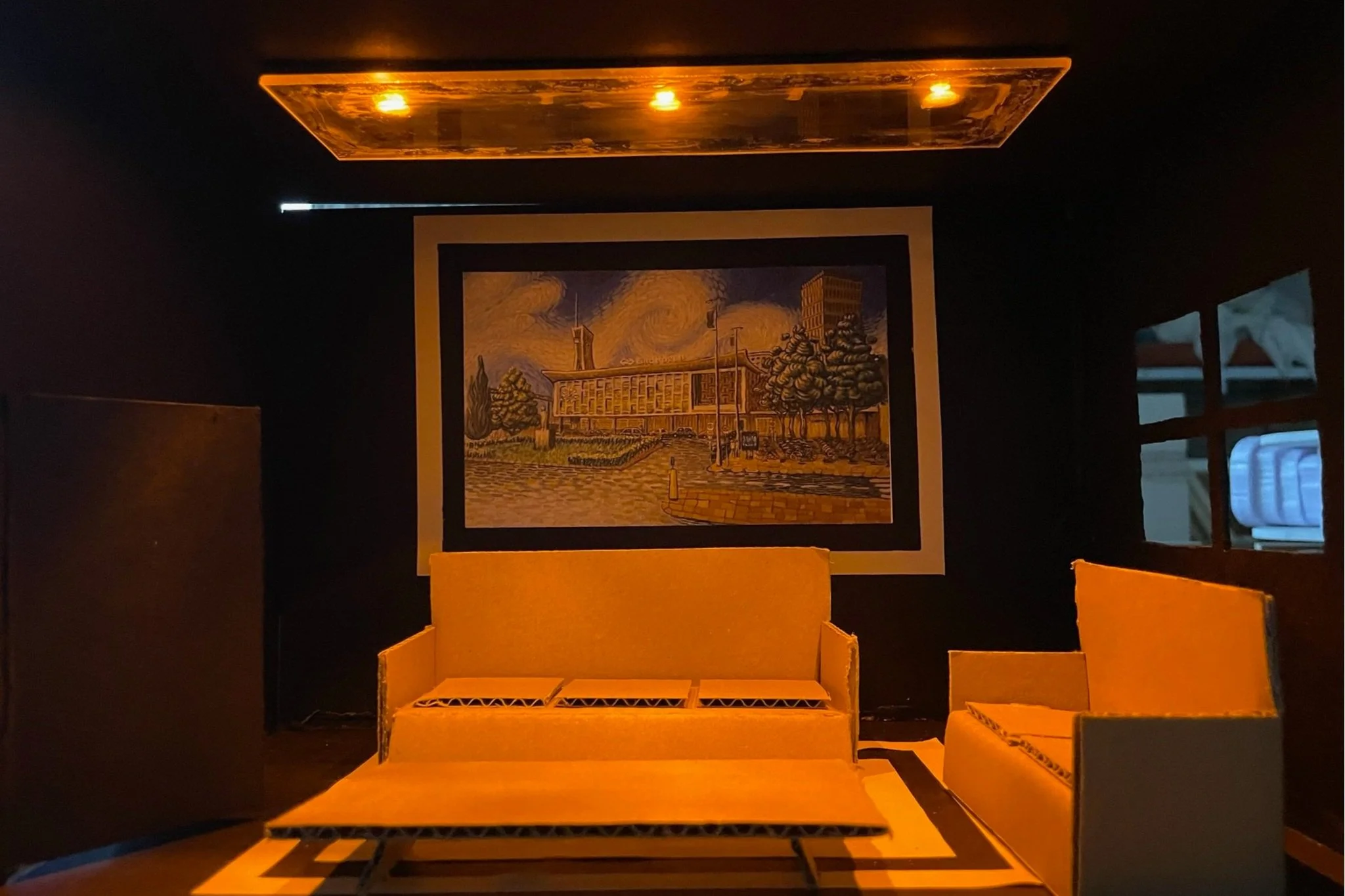
Working with electronics in project 1 (left-top) and Creative Electronics (bottom). 3D-printing with electronics in my FBP (right)
Math, Data & Computing
To make sense of complex information, designers should make use of data analysis. It is mainly about implementing models and algorithms into designed products using data processing and computing. In my first year I had little to no interest in this expertise area because I always linked it to analyzing big chunks of data and calculating (e.g. data analytics). However, the course Making sense of sensors showed me what opportunities this area can give you in projects. It even resulted in a slight shift in my focus in the bachelor as I chose the electives Intelligent Interactive Products and Designing Connected Experiences. Even my minor AI & Business Innovation had a strong focus on this expertise area. I started seeing how data, IoT and machine learning can leverage products and services to a whole new level, making me integrate it into projects. For example, Rigged connects four phones wirelessly and works with a database in the background. This expertise area had the biggest impact on my vision in my bachelor: from no interest in AI and IoT, to making it a big focus within my vision.
In my FBP I made use of an algorithm that analyzes the movements of the patient via the camera tracker, and through code this incoming data is being analyzed. Based on this data, audio feedback is given to the patient. Next to that, the right avatar in the bottom picture mimicks the movements of the patient. I also made use of a thematic analysis to make it easier to extract the most useful data from the interviews, but this was done manually.
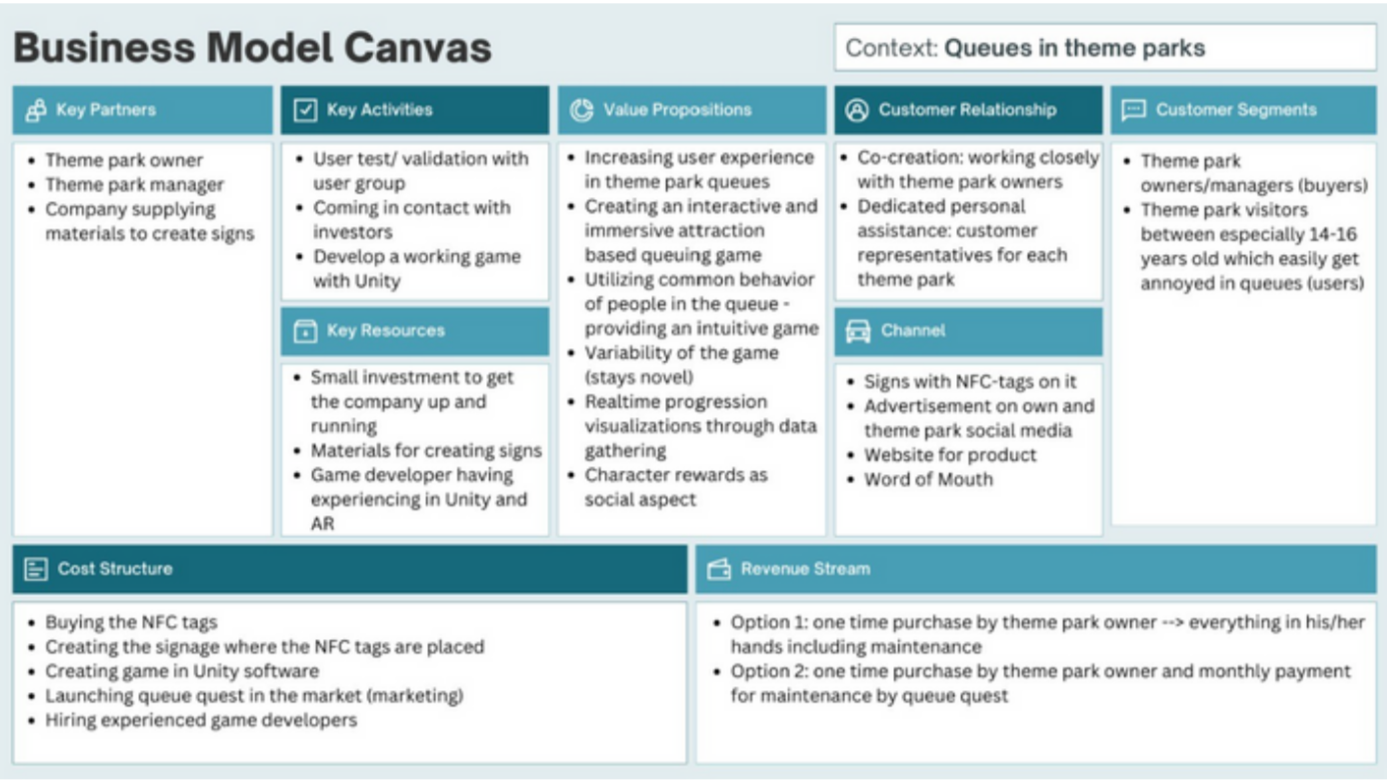
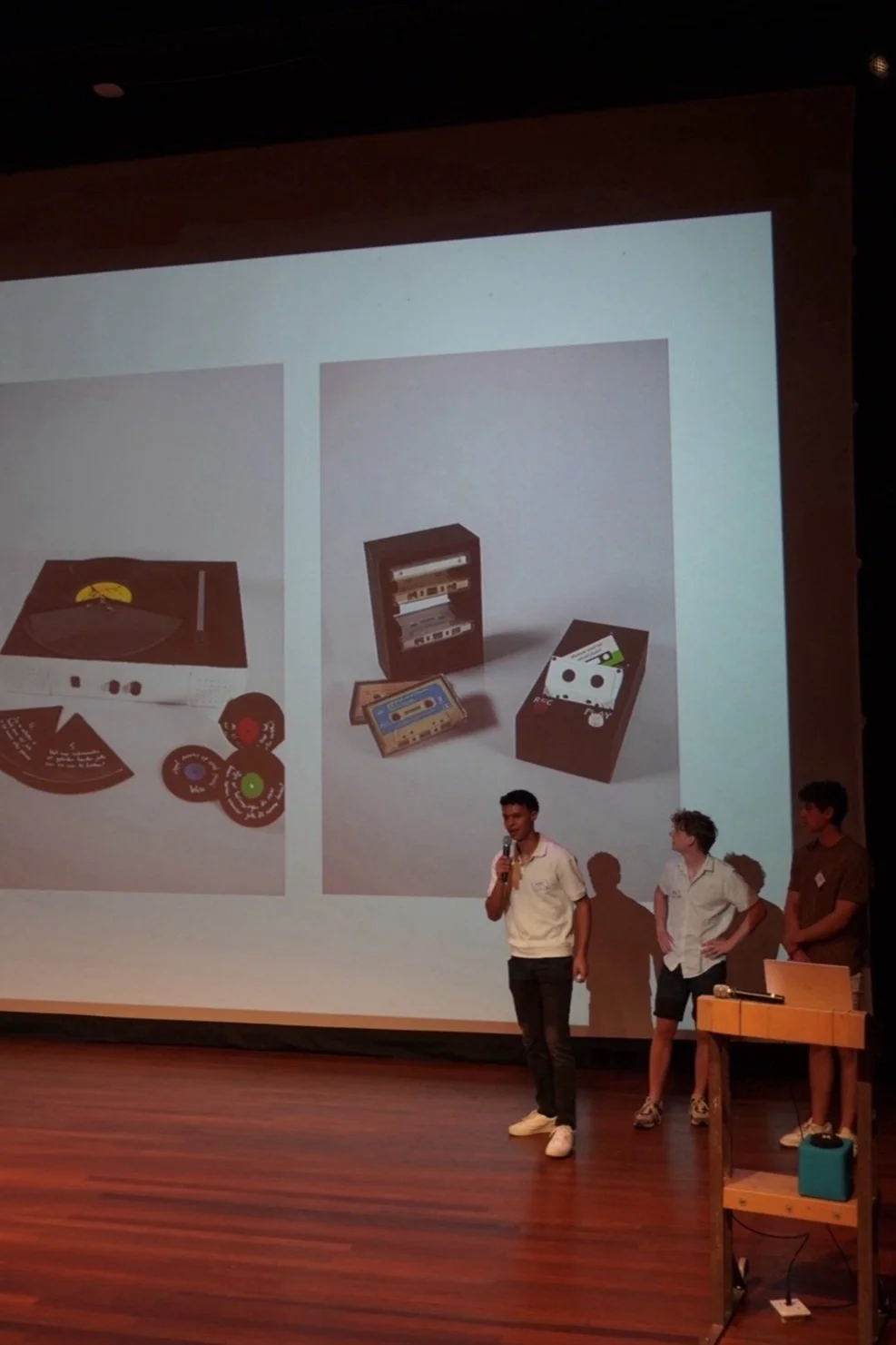
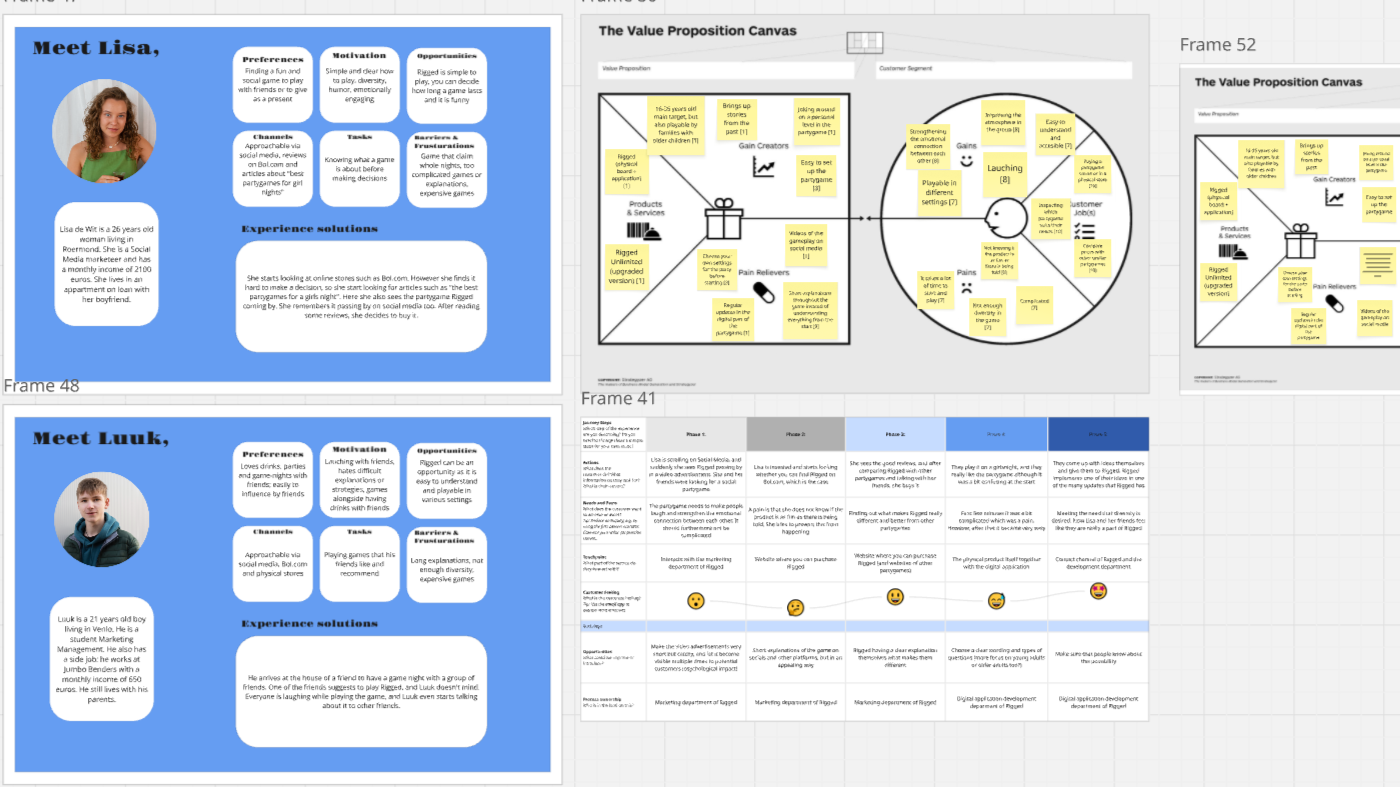
Queue Quest (top), Health conference project 3 (right), and Design Innovation Methods (bottom)
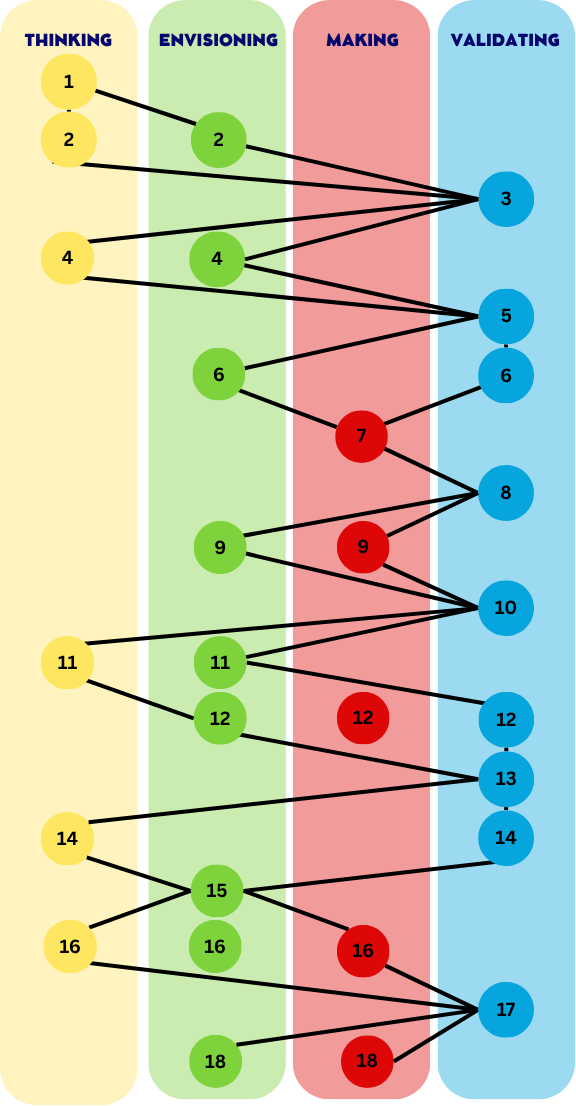
RTDP Process FBP
Professional skills
My strengths were always collaborating, planning and organizing, making me often the team member who keeps everyone on schedule and up to date. Over the past three years, I have improved significantly my presentation skills; from being scared to present, to volunteering myself. I also have started reflecting more consciously, something I neglected at the start of my bachelor. Doing this more consciously results in more well-considered design choices. I am furthermore way more critical towards scientific information. However, I still notice that I should be more careful about what information I choose to believe, especially in the age of AI.